Gorropu Canyon (Gola di Gorropu)
Gorropu Canyon (Gola di Gorropu)
Gola di Gorropu, between Urzulei and Orgosolo, is one of Europe's deepest canyons. Sheer limestone walls, the rio Flumineddu and griffon vultures: a wild hike through the heart of Sardinia's Supramonte.
Gola di Gorropu opens between the municipalities of Urzulei and Orgosolo, in the Supramonte massif, deep in the heart of Sardinia. Its limestone walls reach heights of over 400 meters in places, making this canyon one of the deepest in Europe. The canyon floor, strewn with rocky blocks and crossed by the rio Flumineddu, is accessible only on foot. The wild nature of the place, Mediterranean vegetation clinging to the cliffs and filtered light make it an extraordinary hiking experience.
Practical Information at a Glance
- Access: two main approaches — from the Su Gologone hotel (Flumineddu valley) or from the Genna 'e Silana plateau (SS125). The approach from Su Gologone is longer but less technical.
- Recommended duration: allow a half-day to a full day depending on the approach chosen and progress through the canyon.
- Level: physical hiking, scrambling over slippery rocky blocks; hiking boots essential.
- Recommended season: spring and autumn; in summer, temperatures in the canyon are intense and the risk of sudden flooding exists in autumn.
- Entry: an access fee is charged at certain entry points (amount to be verified on site).
- Accessibility: not accessible — very rough terrain.
What You'll See
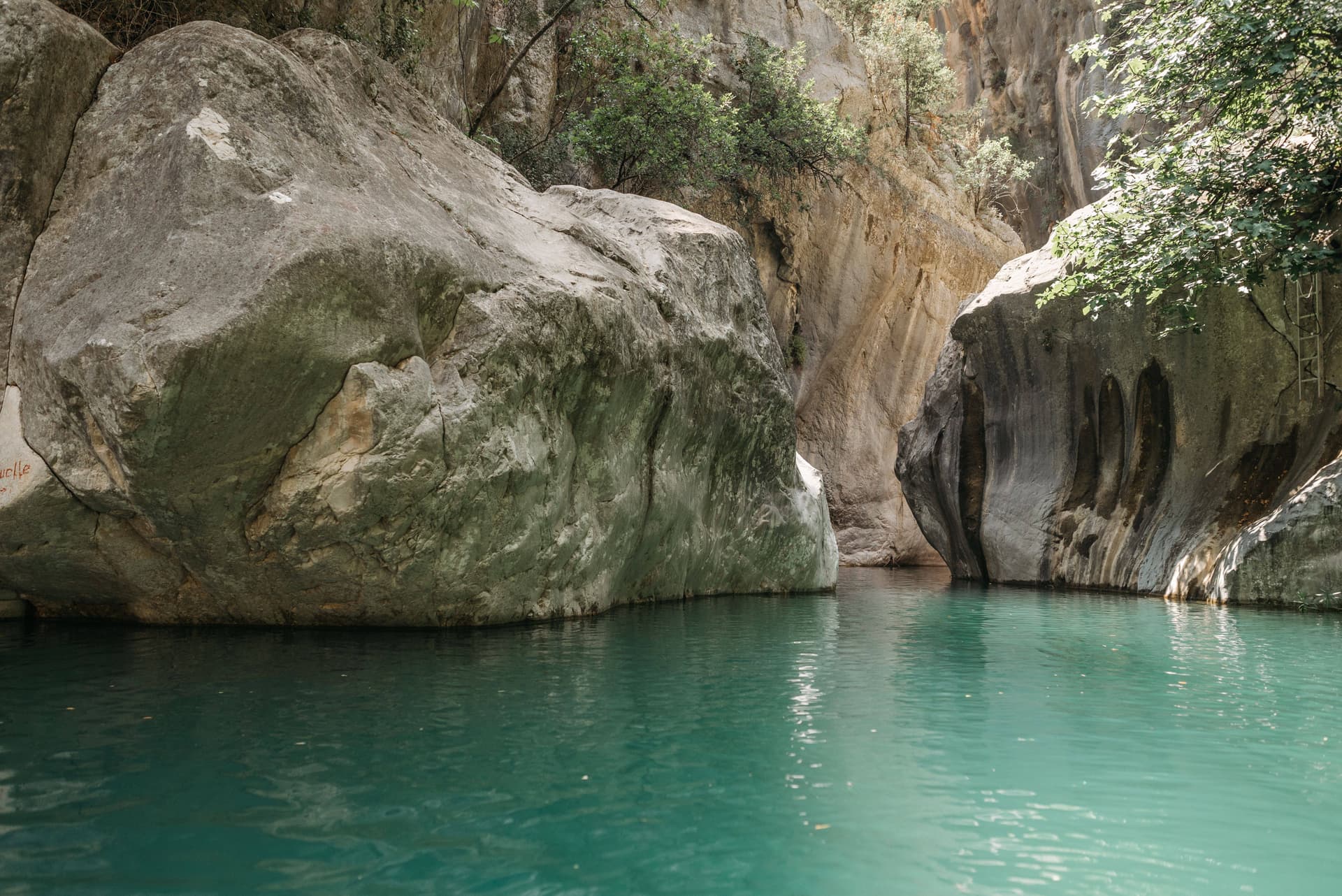
Vertical grey-white limestone walls dominate the canyon floor throughout the entire crossing. The rio Flumineddu partly disappears beneath the blocks in summer, leaving pools of clear water. Vegetation — mastic trees, oleanders, wild fig trees — colonizes every fissure. Griffon vultures (Gyps fulvus) nest in the cliffs and regularly soar above the canyon.
History and Context
The Supramonte was long a territory of Sardinian shepherds, virtually inaccessible to outsiders. Gola di Gorropu remained little-known until the 1980s, when the first Italian speleologists and climbers mapped its walls. Today it is part of the Gennargentu and Golfo di Orosei regional natural park, designated as a site of community interest.
Highlights of the Visit
The Canyon Entrance
The first meters into the canyon are the most striking: the walls suddenly narrow and the light changes quality. The contrast between the narrow sky above and the relative darkness of the canyon floor makes an immediate impression.
Scrambling Over the Blocks
Navigating Gorropu requires careful attention: limestone blocks polished by floods are unstable and slippery. This slow, almost mineral progression is at the heart of the experience. There is no marked path on the ground — you read the terrain.
The Flumineddu Pools
In spring, the river forms turquoise pools between the rocks. In summer, some persist and allow a refreshing break. The water's transparency contrasts with the mineral quality of the walls.
The Griffon Vultures
The Supramonte's griffon vulture colony uses Gorropu's cliffs as a nesting site. Watching these birds hovering above the canyon, just tens of meters away, is a rare experience in Europe.
Photography Tips
Direct light reaches the canyon floor only at midday in summer. Morning and late afternoon, the walls are in shadow — ideal for high-contrast images without overexposure. A wide-angle lens emphasizes the verticality of the cliffs. Avoid flash: it flattens the limestone textures. Protect your gear from moisture when passing near water.
Location and Access
The canyon is located in the Supramonte, on the border of the municipalities of Urzulei and Orgosolo, in Nuoro province. The most common approach starts from the bridge over the Flumineddu, accessible from the SS125 (eastern coastal road). A second approach descends from the Genna 'e Silana pass. Both routes require a personal vehicle; no public transport serves the starting points. Local guides offer accompaniment from Orosei, Dorgali or Baunei.
Nearby
- Cala Luna — fine sandy beach framed by cliffs, accessible on foot from Baunei or by boat from Cala Gonone.
- Bue Marino Caves — network of sea caves near Cala Gonone, featuring stalactites and a former monk seal colony.
- Cala Gonone — coastal village on the Orosei Gulf, departure point for boat excursions to Supramonte coves.
- Tiscali Nuragic Village — prehistoric village hidden in a Supramonte sinkhole, a few hours' hike away.
Frequently asked questions
Spring (April-June) is ideal: moderate temperatures, water in the river and flowering vegetation. Autumn also works well, but storms can trigger sudden floods. In July-August, the heat in the canyon is stifling.
A guide is not mandatory for the canyon entrance, but it is highly recommended to go beyond the first technical passages. Licensed guides operate from Dorgali, Baunei and Orosei.
High-cut hiking boots with lugged soles are essential. The limestone blocks are polished and slippery, even when dry. Sandals or lightweight sports shoes are not recommended.
Yes. From Cala Gonone, boats serve Cala Luna and other coves in the Orosei Gulf. You can hike Gorropu one day and take a sea excursion the next, basing yourself in Cala Gonone or Dorgali.
The canyon entrance (first few hundred meters) is accessible to children used to hiking and supervised. Scrambling over blocks further in requires agility and is not suitable for young children.
There are no supply points in the canyon. Bring sufficient water — at least 1.5 to 2 liters per person — and snacks for the day.
Interested in this visit?
We can include it in your personalised itinerary.