The Giants' Tomb of Osono
The Giants' Tomb of Osono
Near the village of Triei, the Giants' Tomb of Osono is one of the oldest funerary monuments of the Nuragic civilization in Sardaigne, dating back to around 1600 BC.
Who has ever visited Sardaigne without thinking of those galleries of standing stones to which locals give the name "giants' tombs"? The Osono site is one of the finest examples.
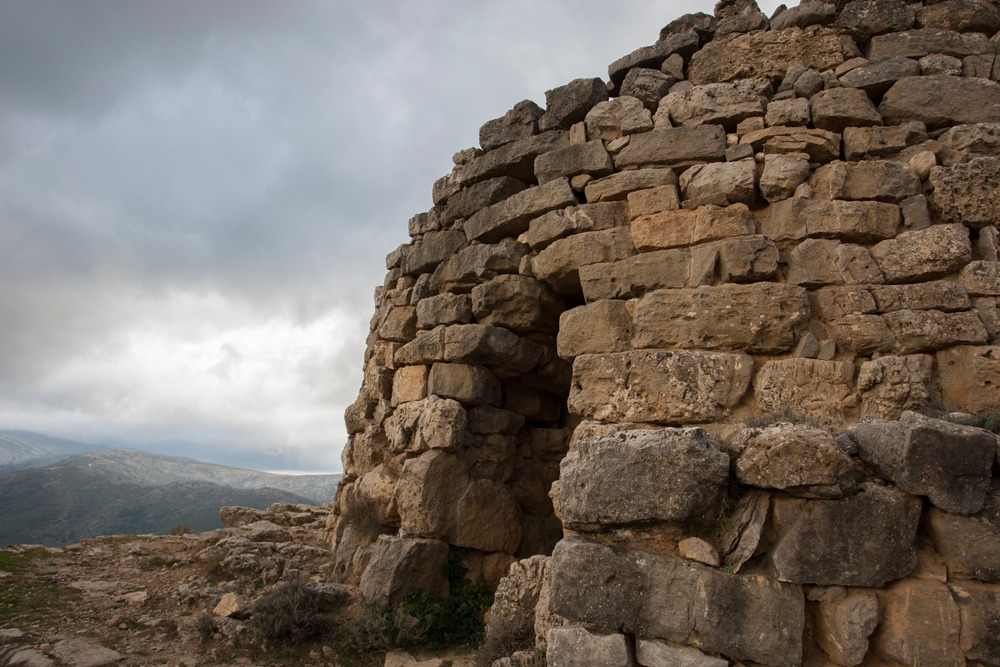
In the east of the Sardaignian island, nestled in a secluded valley of the hinterland, lies a site of great archaeological value: the Giants' Tomb of Osono. Those who have explored Sardaigne have certainly had the chance to observe the nuraghes—cyclopean towers that once dotted the plains and high plateaus. These towers aside, megalithic burial galleries are equally distinctive hallmarks of Nuragic civilization. Indeed, a monument of this kind awaits visitors in the Osono valley, close to the village of Triei. This is no ordinary giants' tomb like those you can find scattered across Sardaigne. Compelling archaeological evidence suggests that the Osono burial site dates back 1600 years BC, making it one of the very first structures built by the Nuragic people. A note for off-the-beaten-path travelers seeking to discover a different side of Sardaigne beyond its beaches and wild cliffs.
A little history…
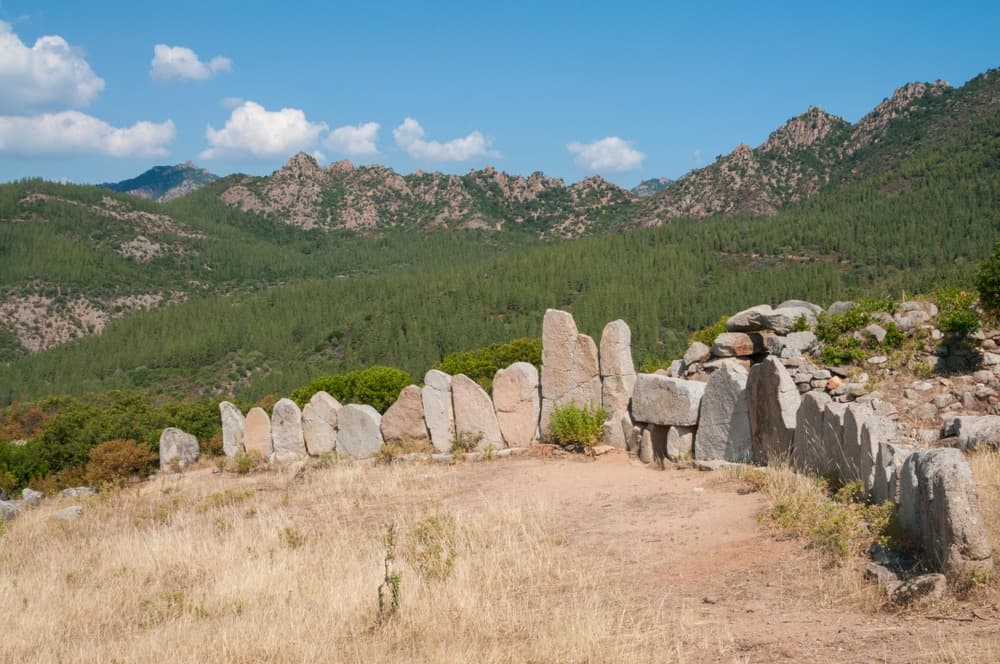
Two thousand years before our era, during the Bronze Age, the Nuragic people inhabited Sardaigne. This civilization maintained public burial grounds for their dead. Megalithic in design, the tombs present themselves as a series of aligned stone blocks, with dolmens and burial chambers. The impressive appearance and grand scale of these structures earned them the name "giants' tombs." Around 800 have been recorded across Sardaigne.
Visiting the Giants' Tomb of Osono
Exploring the Osono site is a privilege for those passionate about anthropology. A thick covering of shrubs kept the monument hidden from view for centuries. It wasn't until the late 1980s that it was unearthed, restored, and opened to the public.
Situated on a steep hillside, the Osono megalithic tomb reveals itself before you. Its schist and granite walls give it a striking cream-colored hue. The monument consists of two parts: a central gallery, built at the beginning of the 16th century BC, and a circular exedra, completed later from the 9th century BC onward. The gallery measures 10 meters in length, and the exedra 12.5 meters. The entire structure spans 22.5 meters. As of now, excavation work continues.
The paradox between the monument's antiquity and its excellent state of preservation is striking. It's an incredible discovery to learn that millennia ago, before the arrival of the Phoenicians or Byzantines, before even the Romans conquered the island, a civilization inhabited this valley and that this megalithic tomb is likely the first one they built. The stones were positioned around 1600 BC. Experts arrived at this dating through archaeological finds: human fossils, fragments of earthenware vessels, bronze daggers, cooking pots, jewelry in glass and amber were uncovered during excavations. This dating provides solid grounds to believe that the abandoned Osono valley is a cradle of Nuragic culture.
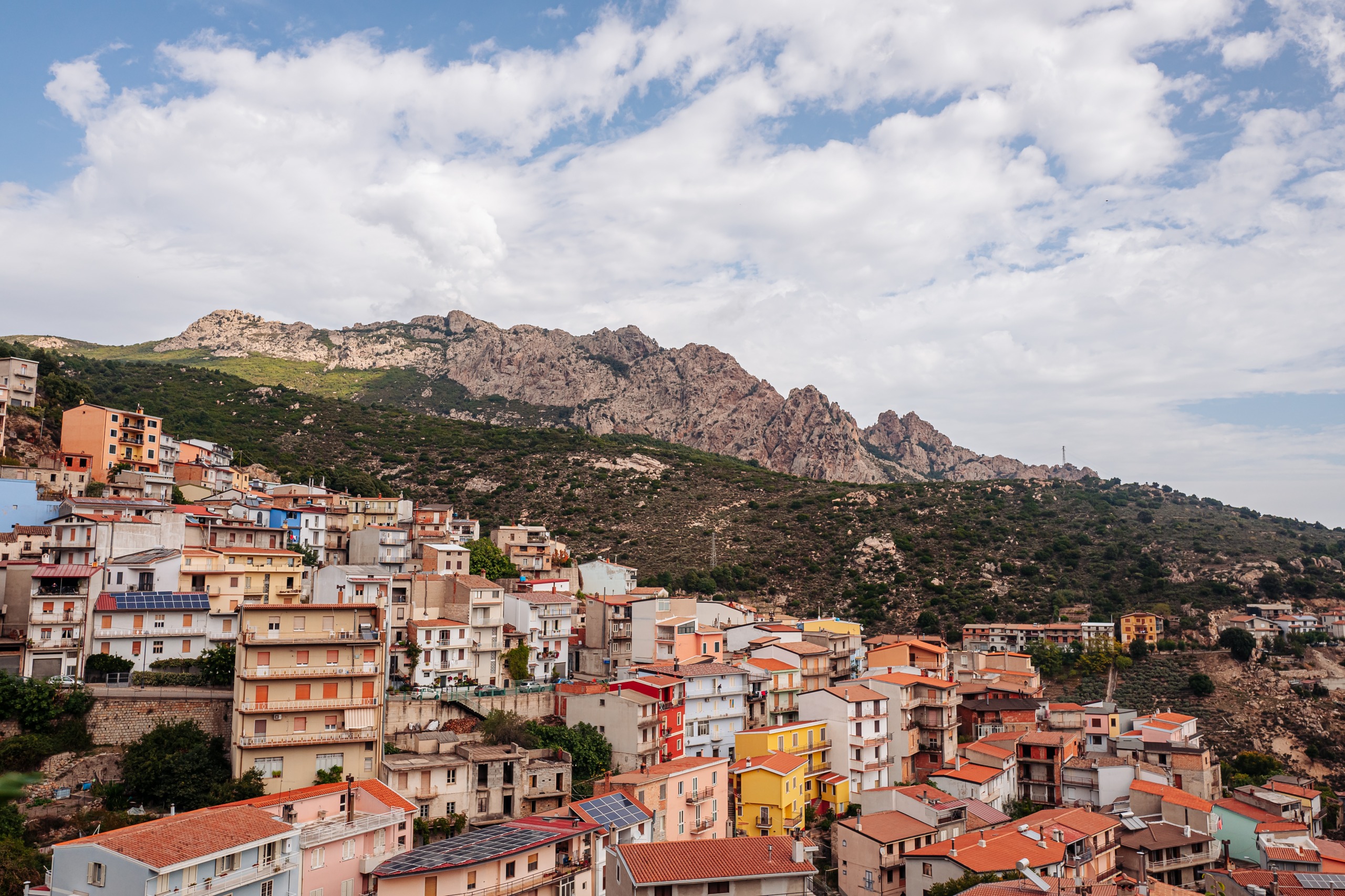
The Osono burial site is located not far from Triei, a small village of 1,097 inhabitants in Nuoro province. If you're driving, take the S125 road connecting Dorgali to Tortoli and continue toward Triei. From there, head toward the Bau Nuraxi district by following the signposted trails. The monument stands approximately 400 m from the last drivable track. Walk down the hill, then at a bend in the slope, continue to the right to reach the tomb.
When to visit?
It's best to avoid Sardaigne in July and August due to heat and crowded tourist seasons. Visitors wishing to see the Giants' Tomb of Osono are encouraged to plan their trip for spring (May) or autumn (September or October).
In the surroundings…
Other Nuragic ruins abound in the Triei area:
- Nuraghe Fratta;
- Nuraghe Bau Nuraxi (1 km away);
- Dupnisa Cave (1 km away).
Nearby
Interested in this visit?
We can include it in your personalised itinerary.