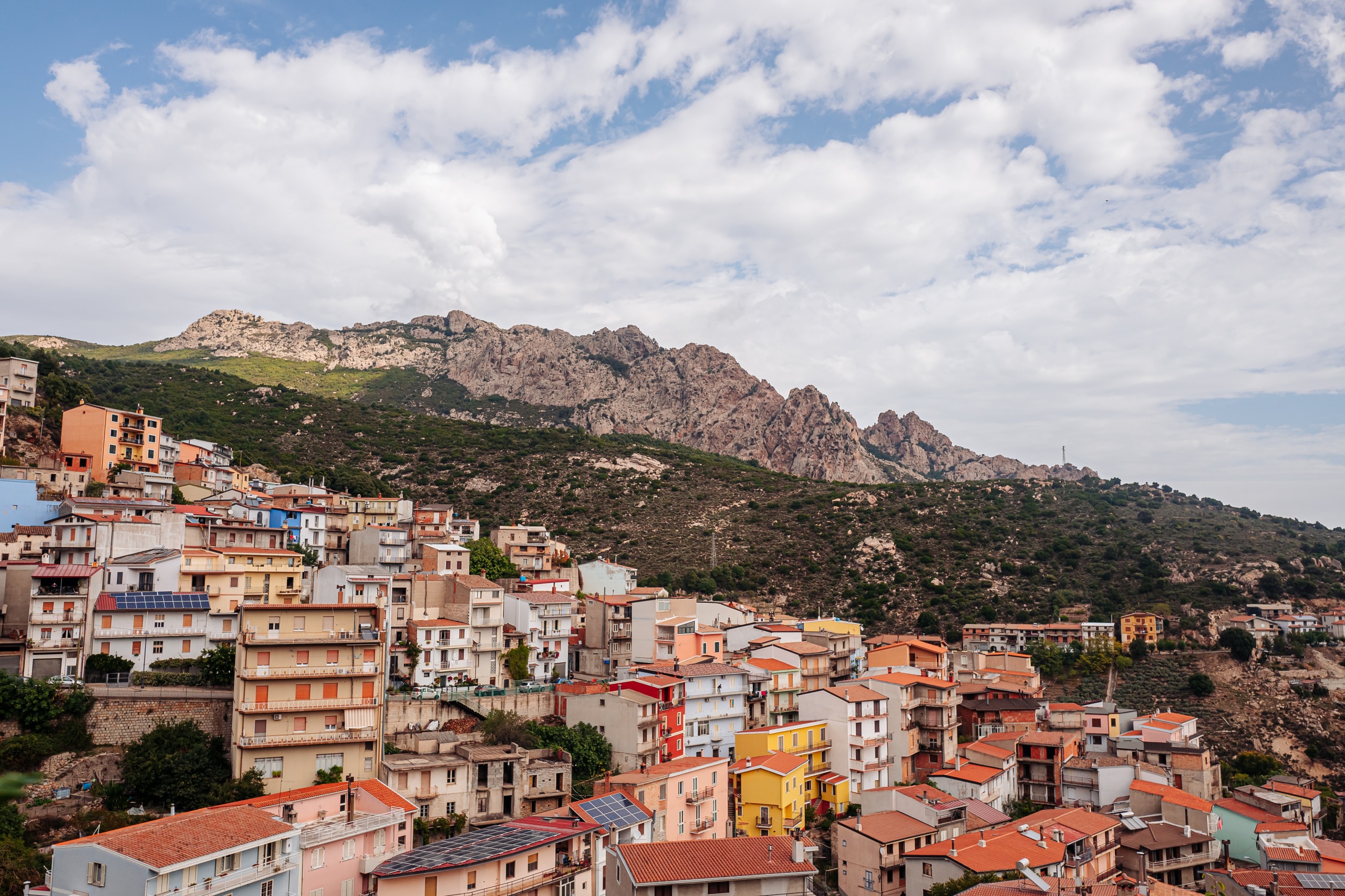
Tortolì
Tortolì, capital of Ogliastra, opens onto the red porphyry rocks of Arbatax and a lagoon where pink flamingos gather. An ideal base for exploring Sardaigne's wild eastern coast.
Tortolì is the capital of the Ogliastra province, on the eastern coast of Sardaigne. A functional transit town, it opens onto the Arbatax lagoon and the red porphyry cliffs that have made the region renowned. Between mountainous hinterland and Tyrrhenian Sea, it serves as a solid base for exploring one of the island's least urbanized zones.
Quick reference
- Access: railway station on the Cagliari–Arbatax line (Trenitalia); Arbatax port a few kilometres away, with Tirrenia connections to Civitavecchia and Genoa.
- Recommended duration: half a day for the town; two to four days to explore Ogliastra.
- Car rental recommended to reach beaches and inland villages.
What to see
Tortolì's centre is lively without being overtly touristy. The covered market, narrow streets of the old quarter and Piazza Rinascita pulse with the rhythm of an ordinary Sardinian town. The Tortolì lagoon, designated a wetland zone, welcomes pink flamingos, herons and ducks according to season. Just beyond, Arbatax port is dominated by red porphyry rocks, a distinctive geological formation visible from both sea and land.
History and context
Ogliastra was long one of Sardaigne's most isolated zones, sheltered by the Gennargentu massif to the west and the sea to the east. Tortolì developed as an administrative centre in the 19th century, progressively absorbing Arbatax's port role. The region is today known for its demography: Ogliastra ranks among the world's highest concentrations of centenarians, a phenomenon studied within research on blue zones.
Highlights of a visit
The Tortolì lagoon
This coastal wetland shelters remarkable birdlife. Pink flamingos are present much of the year. A path partially skirts the lagoon and allows observation without special equipment.
The red porphyry rocks of Arbatax
These volcanic red rock formations emerge directly from the port. The colour contrasts starkly with the blue sea and white sand of nearby beaches. Access is free and a stroll from the port takes around twenty minutes.
Tortolì market
The weekly market brings together local producers and craftspeople. Ewe's cheese, cured meats, honey and pastries made with honey and almonds reflect Ogliastran food traditions.
Photography tips
The red porphyry rocks are most photogenic in late afternoon, when raking light intensifies the orange hues. The lagoon offers striking flamingo silhouettes early in the morning. Avoid midday hours in summer: the light is harsh and the port is busy.
Location and access
Tortolì sits on the eastern coast of Sardaigne, roughly 180 km north of Cagliari by road. The SS125 (Ogliastra scenic route) connects the town to Cagliari in the south and Nuoro in the north. Arbatax port, about 3 km away, operates seasonal maritime links to the mainland. Tortolì station is served by the coastal railway line.
Around the area
- Cea beach — fine sand beach framed by red porphyry rocks, a few kilometres north.
- Baunei and Supramonte — hilltop village perched above spectacular gorges, starting point for hikes to Cala Goloritzé.
- Cala Goloritzé — beach designated a natural monument, accessible only on foot or by boat from Arbatax.
- Jerzu — wine village in the hinterland, known for Cannonau di Ogliastra.
Frequently asked questions
May–June and September–October offer a good balance: pleasant sea, moderate crowds and manageable temperatures for hiking. July–August is peak beach season, with heavy footfall on the beaches.
Yes, a car is essential to reach isolated beaches, hinterland villages and hiking trails. Local public transport is limited away from main routes.
Yes. From Arbatax, boats offer seasonal excursions to Cala Goloritzé. Foot access is from Baunei, about 30 km north, with significant elevation gain.
Yes, access is free from Arbatax port. A walking trail from the port reaches them at no charge.
Ogliastra is identified as one of the world's blue zones, where the proportion of centenarians is statistically high. Researchers attribute this to traditional diet, daily physical activity and strong social bonds.
Want to discover this destination?
Our local advisors design your tailor-made trip.