Cala Gonone
Cala Gonone
Between turquoise coves of the Gulf of Orosei, limestone caves and Supramonte trails, Cala Gonone is eastern Sardaigne's hidden beach treasure.
A fashionable seaside resort, the cove of Cala Gonone on eastern Sardaigne captivates with its jagged, intricately carved coastline. A sublime setting where sea and mountain converge.
When Cala Gonone comes to mind, the image that crystallizes is that of turquoise waters edged with beaches, limestone caves and colorful reefs battered by waves. Each summer, the pull of Mediterranean idleness and escape draws thousands of tourists to the cove. Yet is the charm of Cala Gonone tied solely to seaside pleasures? This pearl of Sardaigne's east coast deserves attention for its unspoiled natural setting as well. From the Supramonte mountain chain to Gennargentu Park, from Bue Marino to Ispinigoli, you will uncover the wild terrain of Ogliastra in all its splendor. Toward the end of July, the resort hosts a jazz festival featuring international artists. Every traveler agrees: Cala Gonone is nothing less than Sardaigne's Cassis!
History
The origin of the place's name sparks considerable scholarly debate. Some ethnologists believe that "Gonone" derives from the adjective of "gonno", an old Sardinian word whose meaning is rendered as "hill" or "rocky mound". Others trace it to "Conone", a name common during the Hellenistic era. More credible, however, is the first hypothesis, judging by the town's location on a steep cliff overlooking the sea.
The cove has been inhabited since time immemorial. The Mannu nuragic complex which overlooks Cala Fuili beach attests to this. Roman tiles and pottery have been unearthed at the site. The civilization that built the nuraghe tower existed between the 15th and 8th centuries BC. In the early 1900s, a group of fishermen from Ponza colonized the region.
The advent of tourism dates to the second half of the 20th century, when youth hostels and campgrounds began investing in the beaches. Despite its reputation, the seaside resort that Cala Gonone has become is not a hotbed of real estate development. The accommodation market is dominated by seasonal residences managed by private owners.
Cala Gonone: A Thriving Beach Resort
Nestled in the heart of the Bay of Orosei, between beaches, caves and red sandstone cliffs, Cala Gonone is a cove of remarkable beauty. It sits within the municipality of Dorgali, 41 km from Nuoro and 108 km from Olbia. Its population is estimated at nearly 1,618 residents. Though young, tourism activity is experiencing robust growth. Beyond beach leisure, the resort offers visitors cultural tourism and ecotourism.
Points of Interest to Visit in Cala Gonone
Whether you seek relaxation, luxury spa treatments or swimming, whether a boat excursion, whether speleology, Cala Gonone is a destination for you! Your Sardaigne vacation can be leisurely, active, educational or contemplative… But undoubtedly, they will be vacations that suit you!
Beaches
Craving an easy escape on sun-drenched beaches? Head to Cala Luna, the resort's most celebrated cove. The crystalline turquoise waters have served as a backdrop for many a romantic comedy. Imposing cliffs shelter the beach, concealing caves accessible only by sea. What will you choose: an exploration of underground cavities or sunbathing on the shore, your palate delighted by seafood and your face caressed by the mistral breeze?
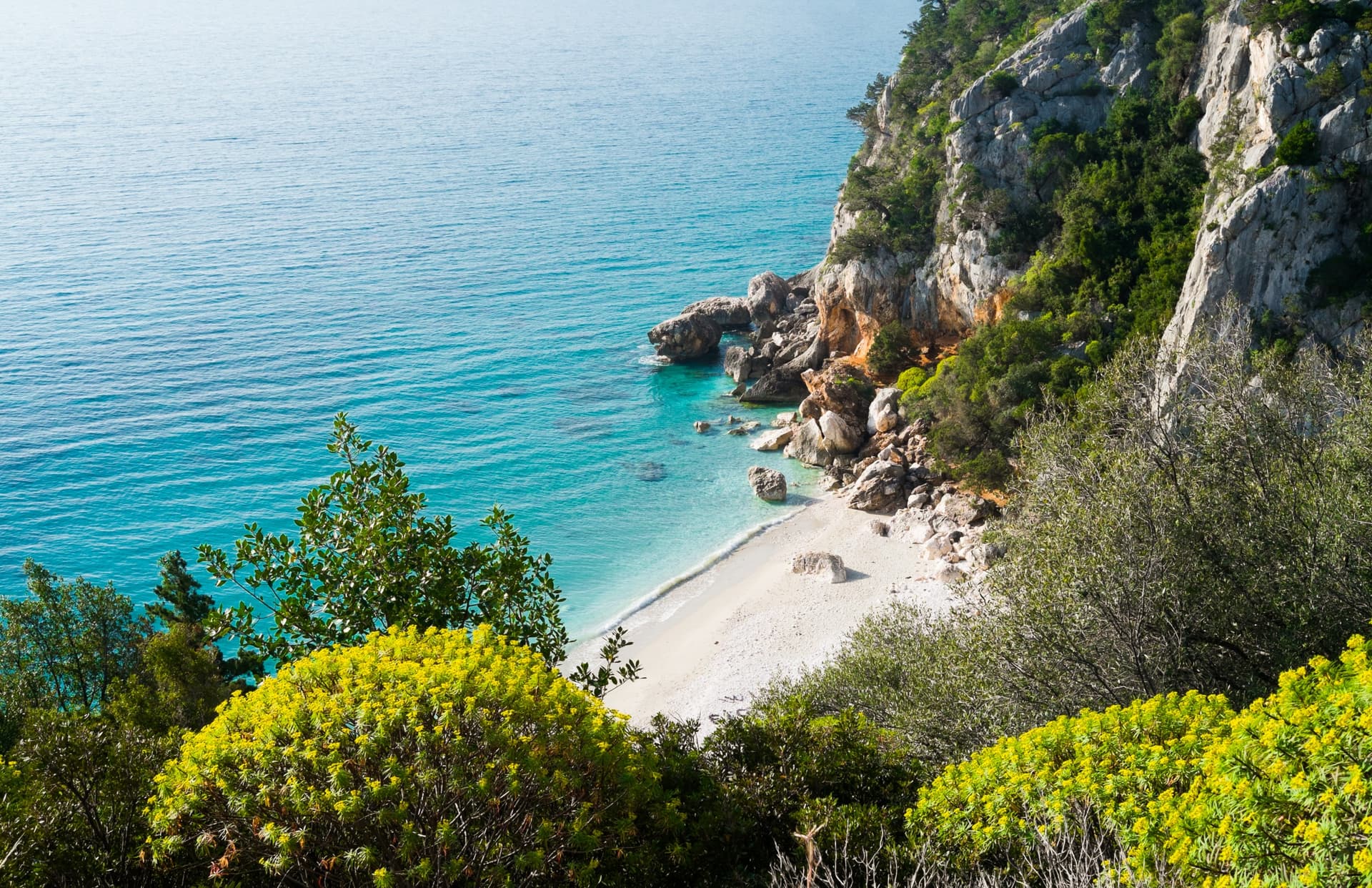
Cruising is another leisure option. From Cala Gonone's jetty, pleasure boats are eager to whisk visitors away to other dreamlike beaches of the Gulf of Orosei: Cala Cartoe, Cala Fuili, Ziu Marine or Cala Sissine, an enchanting cove formed of brown and grey pebbles.
Nuraghe Mannu
Though it resembles a medieval fortress, make no mistake: this cyclopean tower overlooking Cala Fuili beach dates to prehistoric times. Nuraghe Mannu stands 4.7 meters tall and rises 180 meters above sea level. Massive blocks of basalt and trachyte reinforce its imposing appearance. Inside, a partially collapsed staircase is visible. The tower comprises a main building of elliptical form and small adjoining rooms whose function remains unknown.
At the tower's base nestle round and rectangular huts recognized as the remains of a nuragic village. Construction techniques are elementary. Walls are built from unworked raw stones. Stone blocks are juxtaposed without any binding agent. Difficult to access, Nuraghe Mannu nonetheless merits a visit for its status as archaeological heritage of Sardaigne.
Cala Gonone Aquarium
Opened to the public in 2010, Cala Gonone Aquarium is a popular activity especially for family travel. Your children will leap with joy observing fish, seahorses, jellyfish or starfish up close—creatures from their science textbooks come alive. The facility boasts 40 tanks in total: 15 dedicated to treatment and health care, and 25 to recreational exhibitions. The number of marine creatures housed reaches 2,000, with over 300 species represented. Mediterranean aquatic fauna and flora predominate, but one pool is entirely devoted to tropical fish.
Bue Marino Caves
Near Cala Gonone, the Bue Marino caves hold an unforgettable speleological adventure. Deep within the grotto, you will discover a beach where monk seals once came to breed (the species is currently considered extinct in Sardaigne). The cave stretches along limestone cliffs for over 80 km, but only the southern gallery, 900 meters long, is accessible to visitors. Stalactites and stalagmites resembling candelabras decorate the vault, and the entrance walls display rupestral engravings. Upon leaving Bue Marino, your visit can continue in the Ispinigoli caves.
Cultural Events in Cala Gonone
Cala Gonone has launched a musical event of worldwide scope: the jazz festival. Each year, artists from across the globe come to perform their melodies. The festival runs from July 21 to July 31 in… the illuminated Bue Marino cave.
When to Go?
Cala Gonone's climate is influenced by the Mediterranean: warm summers and cool winters accompanied by brief storms. Most precipitation concentrates in autumn and spring. The best travel season falls between May and September, when skies are clear and tempest-free. Caves close to visitors in foul weather.
The nearest airport to Cala Gonone is Olbia Airport, known as Olbia Costa Smeralda. Finding a direct flight Paris–Olbia is straightforward given some ten flights per week. Air France and Transavia are the two main carriers operating this route. Two other airports technically offer flights but are impractical due to distance: Alghero (166 km) and Cagliari (220 km).
Allow two hours of flight to reach Olbia Airport. From there, simply hail a taxi or arrange a private car to take you directly to your hotel. The journey lasts 1.5 hours over a total distance of 106 km. Budget-minded travelers can take the ARST public bus, which connects Olbia Airport to Cala Gonone via a connection in Posada.
You Will Love…
- Swimming in the crystalline waters of Cala Luna;
- Tracing the rocky coves of Cala Fuili;
- Studying the anthropomorphic figures adorning Bue Marino grotto;
- Visiting nuragic ruins;
- Enjoying a group trek through the mountainous Gennargentu Park;
- Savoring excellent seafood.
Attractions in Cala Gonone
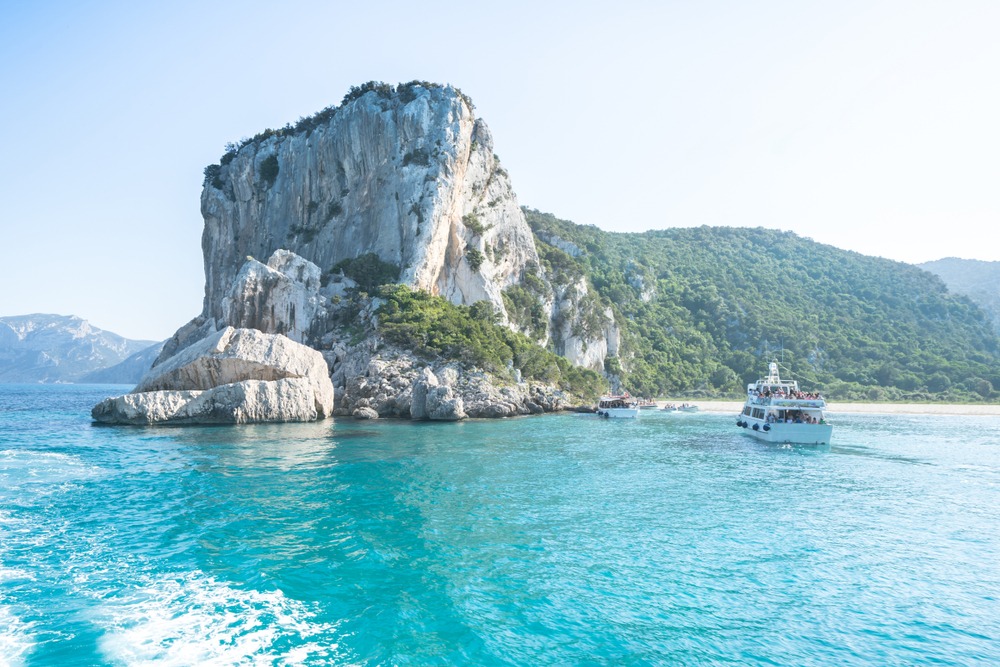
Le golfe d'Orosei
40 km de falaises, criques accessibles en bateau ou par sentier, grottes calcaires et sites nuragiques sur la côte orientale de la Sardaigne.
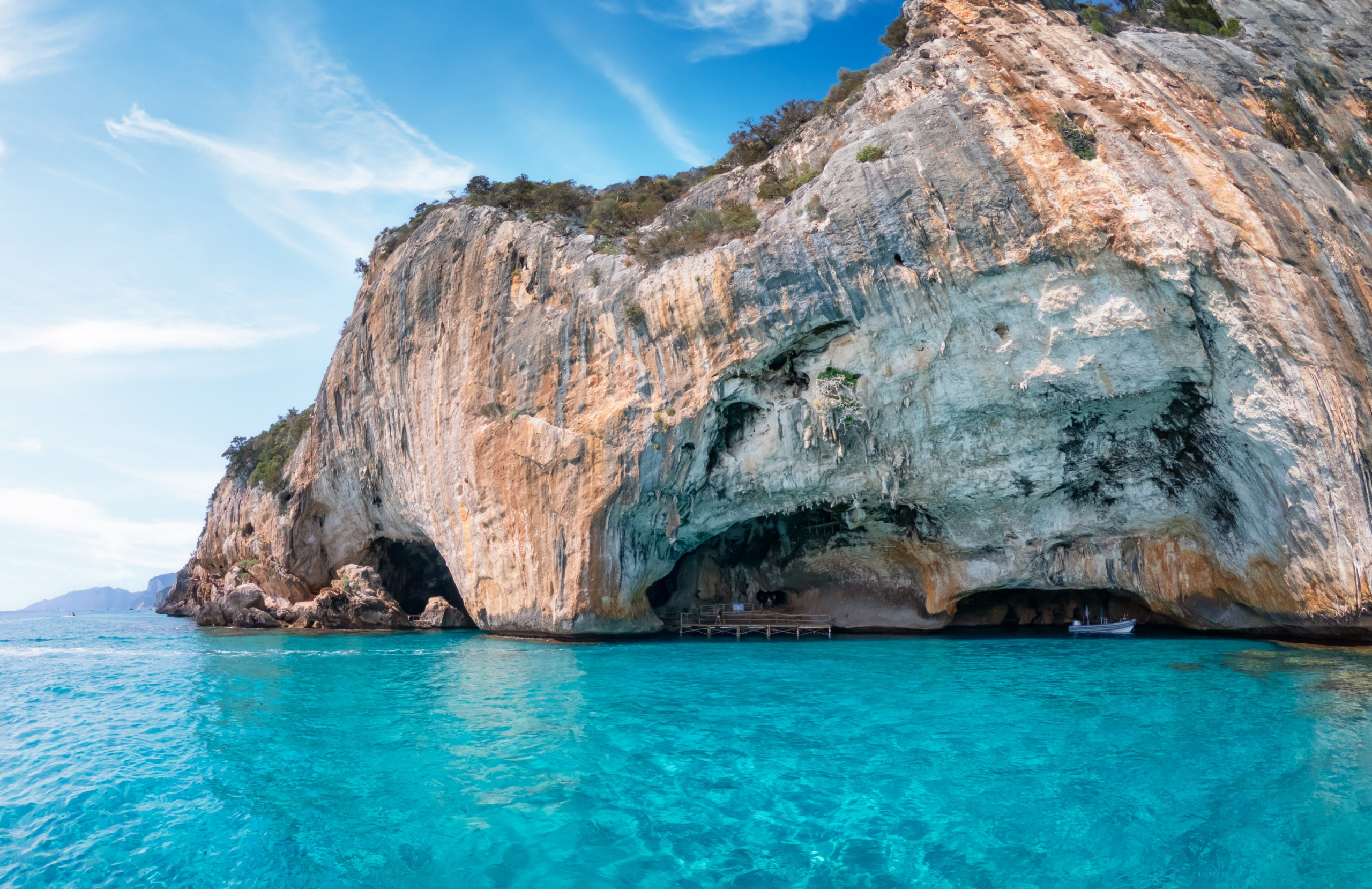
bue_marino
Réseau karstique du golfe d'Orosei, près de Dorgali : peintures rupestres vieilles d'environ 3 000 ans, lac salé souterrain et anciens refuges du phoque moine.
Want to discover this destination?
Our local advisors design your tailor-made trip.